Metal Roofing in Bradenton FL: Why It Performs Well in Florida’s Climate
If you live in Bradenton—or anywhere along Florida’s Gulf Coast—you know how demanding the climate can be on a roof. Between scorching summer heat, intense sun exposure, humidity, salt‑laden air from the ocean, and frequent storms or hurricanes, a roof here faces an onslaught of stressors that many traditional roofing systems struggle to withstand.
That’s why metal roofing has become such a smart choice for Florida homeowners. When properly selected, engineered, and installed, a metal roof doesn’t just survive—it thrives under conditions that can degrade other materials rapidly. In this deep-dive guide, we’ll explore exactly why metal roofing stands out in Bradenton and similar coastal areas: from resistance to rust and salt air, to storm durability, energy efficiency, long lifespan, and low maintenance. If you’re evaluating roofing options for your home and want a roof built for life in a coastal climate, read on.
The Climate Reality for Bradenton Homes — and What That Means for Your Roof
Living in Bradenton comes with many perks—sunshine, coastal breezes, lush landscapes—but also responsibilities when it comes to protecting your home. The local climate combines several challenging factors:
- Humidity and salt air: Sea breezes bring salty moisture that accelerates corrosion on metal components and deteriorates wood, underlayment, and fasteners in many roofs over time.
- Extreme sun and UV exposure: Florida summers bake rooftops, driving up internal temperatures and degrading materials that absorb heat.
- Heavy rain, storms, and hurricanes: Rainfall often comes in intense downpours, and wind gusts—especially during hurricane season—can easily exceed thresholds that many roofs aren’t engineered for.
- Thermal cycling and moisture: Heat by day, humidity by night — the cycle of expansion, contraction, and moisture retention can cause wear, warping, rot, leaks, and structural stress.
In this environment, a roof must do far more than simply cover your home. It must reflect heat, resist salt‑air corrosion, shed water quickly, withstand wind uplift, and require minimal maintenance while providing long-term performance.
That’s why many Bradenton homeowners have turned to metal roofing — a material and system engineered for exactly this type of climate.
How Metal Roofing Is Engineered for Coastal & Storm‑Prone Conditions
Corrosion Resistance and Salt Air Protection
One of the biggest factors working against roofs along Florida’s coast is salt air. Over time, salt-laden moisture can cause severe corrosion on metals, rust fasteners, and degrade roof seams, flashing, and underlayment — especially if inferior materials are used.
Metal roofing systems designed for coastal environments address this risk directly. Metals like aluminum or properly coated steel (e.g. galvalume or similar rust‑resistant steel) are ideal for salt‑air conditions. Aluminum is particularly valued because it naturally resists rust, and even coated steels with corrosion‑resistant finishes perform well when maintained properly. These materials dramatically reduce the risk of oxidation and corrosion compared to traditional roofing systems or untreated metals.
Beyond the metal itself, coastal‑rated metal roofing uses fasteners, clips, and sealants designed to resist rust. Where older roofs might suffer from rusted nails or degraded flashing, a properly built metal roof maintains integrity — even in homes just minutes from the beach.
This corrosion resistance translates into a roof that ages gracefully — not one that needs constant patching or replacement after a few years of salt air exposure.
Wind Uplift and Storm Resistance — Built for Hurricanes
Hurricanes and tropical storms are a reality in Florida, and roofs often bear the brunt of wind, rain, and debris. Many traditional roofs — especially older shingle roofs — can struggle, with shingles blowing off, seams lifting, or roofs failing altogether.
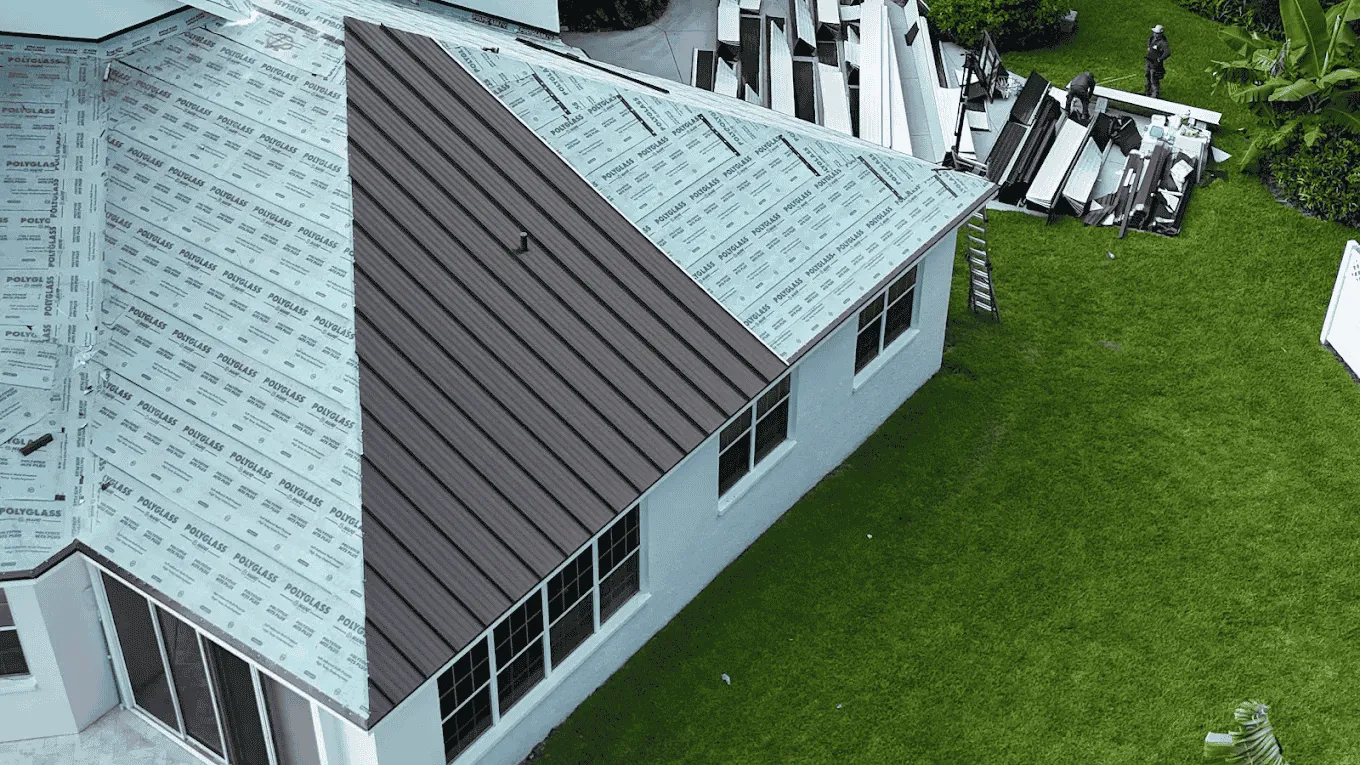
Metal roofing systems, on the other hand, are engineered to withstand severe weather. Standing‑seam metal roofs and interlocking panel systems use secure, concealed fasteners and attachment methods that resist wind uplift. When properly installed, many metal roofs are rated to resist winds in the 130–160 mph range — enough to survive many major storms and lesser hurricanes.
That strength isn’t just about resisting wind. Because metal roofing sheds water rapidly and doesn’t rely on shingles or layers that can absorb moisture, it reduces risks of leaks, water intrusion, or structural damage under heavy rainfall.
For coastal homeowners looking for long-term protection and resilience, that kind of storm-ready performance is a major advantage.
Heat Resistance, Energy Efficiency & Comfort Under the Florida Sun
The Florida sun is relentless — and over time that heat can wreak havoc on roofing materials. Asphalt shingles can absorb and trap heat, degrade under UV exposure, and contribute to higher cooling costs inside the home.
Metal roofs, however, behave differently. Their surfaces often include reflective “cool‑roof” coatings or finishes that reflect rather than absorb solar radiation. That helps keep the roof surface cooler, reduces heat transfer into the attic, and lowers the burden on air conditioning systems — which often run for much of the year in Bradenton’s hot, humid climate.
Additionally, because metal roofs are impermeable and shed water quickly, they don’t trap moisture like some less resilient materials. This reduces the risk of mold, mildew, or rot — problems that are common in roofs exposed to humidity and repeated wet‑dry cycles.
When properly paired with adequate attic ventilation and insulation, a metal roof becomes part of a system that helps your home stay cooler, maintain indoor comfort, and avoid energy bills spiking — all while protecting the structural integrity of the roof over time.
Long Lifespan and Long-Term Value — Built Once, Protected for Decades
One of the most compelling reasons homeowners choose metal roofs in Florida is their lifespan. While traditional roofing materials like asphalt shingles often need replacement every 15–25 years — and may wear out faster in Florida’s punishing climate — metal roofs routinely last 40 to 70 years or more when properly installed and maintained.
Because of that longevity, metal roofing is often more cost‑effective over the life of the home, even if the upfront price is higher than simpler materials. Instead of multiple roof replacements, you may only need one — and possibly none for as long as you own the home. This reduces long-term maintenance costs, material waste, and the recurring hassle of full re-roofing.
For homeowners planning to stay in their home for decades, that translates to long-term security, fewer interruptions, and greater return on investment.
Beyond durability, metal roofs tend to resist many common failure modes: they don’t crack, curl, rot, or suffer from mildew; they’re resistant to insects and pests; and because of their smooth, impermeable surface, they don’t trap moisture — which reduces long-term degradation.
Low Maintenance, Less Hassle — A Roof You Can Rely On
Maintenance is a major factor when selecting a roof for a Florida home. Traditional roofs may demand frequent upkeep, repairs due to leaks, or replacement of worn materials — especially in coastal or storm-prone areas. Metal roofing, by contrast, requires far less ongoing maintenance.
Because metal is resistant to corrosion (when using the right materials), doesn’t absorb moisture, and resists warping or cracking under thermal stress, upkeep tends to be minimal. Periodic inspections — especially after storms — and occasional cleaning to remove salt residue or debris are usually enough to keep the roof performing well.
For many homeowners, that “set-and-forget” nature of a metal roof is a key benefit: you’re investing upfront for decades of largely worry-free protection.
Addressing Common Concerns — What You Should Know Before Choosing Metal
No roofing solution is perfect. Metal roofing — as excellent as it is for Florida conditions — does have trade-offs. But when chosen and installed appropriately, the benefits overwhelmingly outweigh the potential downsides.
Upfront Cost
Metal roofing generally costs more upfront than simple shingle roofs. Because of higher material costs and more precise installation requirements (wind‑rated fasteners, corrosion‑resistant coatings, proper sealing), metal roofs often come with a premium price tag.
However, because metal roofs rarely need replacement, and because maintenance expenses tend to be lower over time, the long-term value and lifespan often justify the initial investment.
Noise and Thermal Expansion
Some homeowners worry that metal roofs will be noisy during rain or storms, or that metal might heat up too much under the Florida sun. In reality, when metal roofs are installed with appropriate underlayment, insulation, attic ventilation, and structural support, rain sound is typically comparable to — or even less than — many traditional roofs. The system beneath the metal helps buffer noise and manage thermal effects.
With reflective coatings and proper ventilation, heat absorption is minimized, and the roof contributes to energy efficiency rather than increasing cooling loads. That’s a key reason why metal roofs often reduce summer energy costs instead of raising them.
Suitability Depends on Quality & Installation
Not all metal roofs are created equal. The performance advantages described above depend heavily on using the right materials — corrosion‑resistant metals, coastal-rated fasteners, proper underlayment, and precision installation methods. A poorly installed or cheap metal roof may not resist salt air, might have vulnerabilities to wind uplift, or may lack the longevity that makes metal attractive.
That means hiring installer contractors with experience in Florida coastal conditions, using certified materials, and following local building codes and hurricane‑ready standards. When that’s done correctly, a metal roof becomes one of the best long-term investments a homeowner can make.
Why Metal Roofing Is Often the Best Long-Term Option for Bradenton Homes
If you’re evaluating roofing options for your Bradenton home, here’s a quick recap:
- Metal roofing — when properly selected and installed — resists salt-air corrosion, wind uplift, and water intrusion far better than many traditional systems.
- It reflects solar radiation to reduce heat load, improving comfort and cutting cooling costs during Florida’s long, hot summers.
- It offers exceptional durability and lifespan — often 40 to 70 years or more — meaning fewer replacements and long‑term savings.
- It demands relatively low maintenance compared with shingle roofs or other traditional options.
- It holds up under hurricane-strength winds, heavy rain, and coastal conditions, offering security that many other roofs can’t match.
For homeowners who value performance, longevity, energy efficiency, and minimized upkeep, a metal roof isn’t just a good option — it’s often the smartest long-term roofing solution for coastal Florida.
Investing in a Roof That Works As Hard As You Do
Your home deserves a roof that’s as resilient, dependable, and weather‑ready as the people living under it. In a climate like Bradenton’s — humid, sunny, salt‑air drenched, and storm‑prone — that means choosing roofing materials and systems designed specifically for those challenges.
Metal roofing delivers a package of benefits uniquely suited to Florida’s environment: strength, durability, heat management, corrosion resistance, and long-term value. It’s not a temporary fix — it’s a long‑term investment in security, comfort, and peace of mind.
If you want a roof that stands strong through hurricanes, resists salt air, keeps your home cooler, and lasts decades without needing constant attention — a metal roof is as close to a “set it and forget it” solution as you’ll find.
For Bradenton homeowners building for the future, it often makes sense to invest in what’s proven to perform.
A metal roof isn’t just a roof. It’s your home’s shield — built for life on Florida’s coast.