Roof Ventilation in Sarasota: Signs Your Attic Needs Help
How Proper Attic Ventilation Protects Southwest Florida Homes from Heat and Moisture

A hot attic is common in Southwest Florida, but excessive heat, trapped moisture and uneven airflow can signal a roof ventilation problem. For homeowners in Sarasota, Venice, Bradenton, Lakewood Ranch, North Port, Englewood and Port Charlotte, proper attic ventilation helps protect the roof system while supporting a more comfortable, efficient home.
Why Roof Ventilation Matters in Southwest Florida
Your attic sits between the living space and the roof. When air cannot move through that space correctly, heat and moisture can build up beneath the roof deck. Sarasota’s long cooling season, strong sun and high humidity make balanced ventilation especially important.
A well-designed system allows outside air to enter through intake vents, often near the soffits, and lets warmer air escape through exhaust vents near the upper part of the roof. The goal is steady airflow across the attic, not simply adding the largest vent available.
Signs Your Attic May Need Better Ventilation
Some ventilation problems are easy to overlook because the warning signs appear inside the home rather than on the roof. Watch for:
• An attic that feels unusually hot or stuffy
• Musty odors or visible condensation
• Damp, compressed or deteriorating insulation
• Rust on nails, fasteners or metal components
• Dark staining on roof decking
• Uneven temperatures between rooms
• Air-conditioning equipment that seems to run constantly
• Premature wear on shingles or roofing materials
• Mold-like growth that should be professionally evaluated
These symptoms can have more than one cause. A roof inspection should evaluate ventilation together with insulation, air sealing, leaks and the overall condition of the roofing system.
How Heat Affects the Roof Above Your Attic
On a sunny Sarasota afternoon, the roof absorbs substantial heat. Without adequate airflow, that heat can remain trapped beneath the decking. Over time, excessive temperatures may accelerate aging of roofing materials and sealants. They can also transfer more heat into the home, making upstairs rooms harder to cool.
Ventilation alone will not solve every comfort or energy problem, but it is an important part of a complete roof-and-attic system. Insulation levels, ductwork, attic access points and air leaks from conditioned rooms also influence performance.
Why Humidity and Moisture Are Just as Important
Southwest Florida homeowners often think of attic ventilation only as a heat issue. Moisture can be equally damaging. Humid air, roof leaks, bathroom exhaust fans venting into the attic or gaps around ceiling penetrations may add moisture to the space.
When damp air reaches cooler surfaces, condensation can form. Persistent moisture may contribute to damaged insulation, corrosion and deterioration of wood components. If you notice staining or a musty smell, identify the source rather than simply adding a fan.
Common Roof Ventilation Mistakes
More ventilation is not automatically better. Intake and exhaust must work together. Adding exhaust vents without enough intake can create poor airflow and may pull conditioned air from the home through ceiling gaps. Mixing incompatible exhaust types can also disrupt the intended airflow pattern.
Other common problems include blocked soffit vents, insulation covering intake openings, bathroom fans terminating in the attic and vents installed in the wrong locations. A local roofing professional should calculate ventilation needs based on the attic, roof design and existing components.
What Homeowners Can Check Safely
You do not need to walk on the roof. From ground level, look for damaged or obstructed vents, loose soffit panels and debris around roof openings. Inside the attic, if it is safe and accessible, look for damp insulation, staining, rust or blocked soffit pathways. Never step between attic framing members, disturb electrical components or enter an area that is excessively hot, wet or difficult to access. When in doubt, schedule a professional inspection.
Roof Ventilation for Shingle, Tile and Metal Roofs
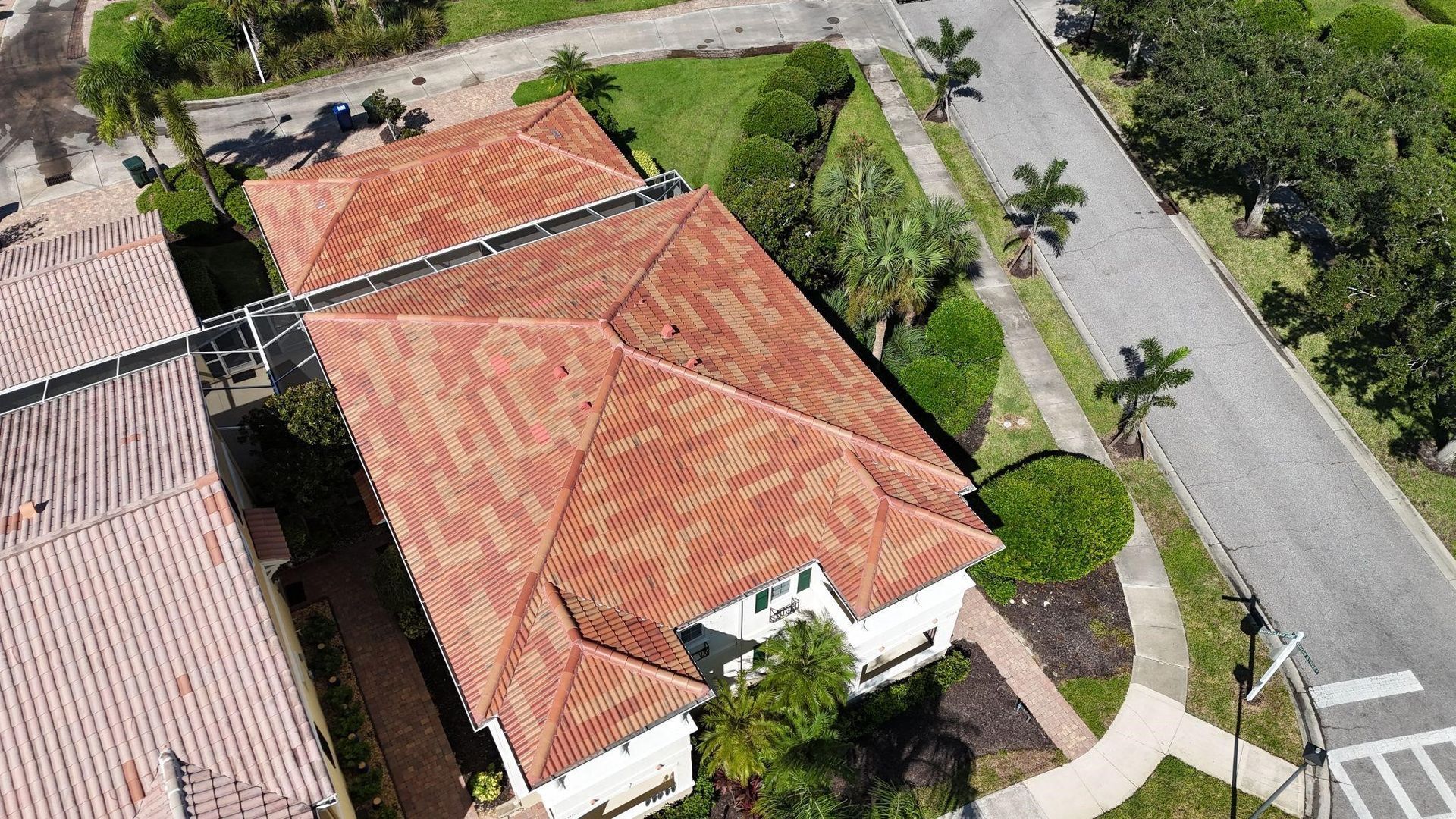
Ventilation needs are tied to the attic and roof design, not simply the visible roofing material. Asphalt shingle, tile and metal roofs can all benefit from a properly planned intake-and-exhaust system. However, vent products and installation details must be compatible with the roofing assembly.
Tile roofs require careful flashing around penetrations. Metal roofs need properly sealed and compatible vent components. Shingle systems should use vents that integrate correctly with the underlayment and roof covering. Improper installation can create leak risks even when the ventilation concept is sound.
Local Conditions from Manatee County to Charlotte County
Homes near Bradenton and coastal Manatee County may face strong sun, salt-laden air and high humidity. Sarasota and Venice homes range from newer construction to older properties with modified attic systems. North Port, Englewood and Port Charlotte homes may have different roof shapes, additions or storm-related repairs that affect airflow.
A ventilation plan should account for the home’s actual layout, roof age, insulation and previous work. A generic vent recommendation is rarely as useful as an inspection of the complete system.
When to Schedule a Roof and Attic Inspection
Arrange an inspection if you see moisture staining, recurring condensation, damaged vents, deteriorated decking or unexplained temperature differences. It is also smart to evaluate ventilation before a roof replacement, because that is the best time to coordinate intake, exhaust, underlayment and roofing materials.
Pelican Roofing FL serves homeowners throughout Sarasota, Manatee and Charlotte counties. We can inspect your roof and attic ventilation, explain what is working, identify concerns and recommend practical next steps.
Call Pelican Roofing FL at 941-914-4088 or request a free estimate to protect your roof from Southwest Florida heat and moisture.